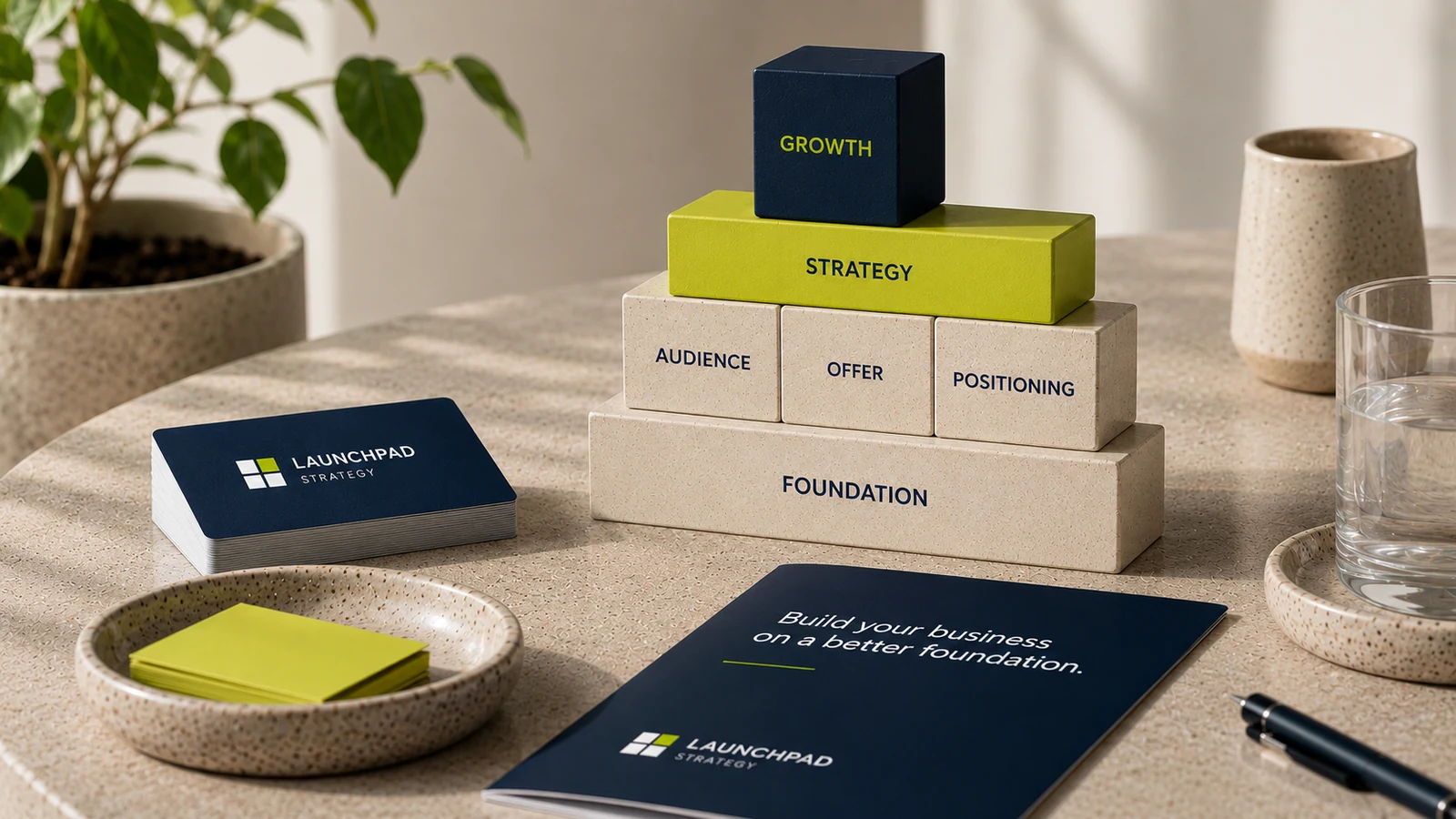
What I’m doing differently the second time around

Aug 18, 2026

Founder reflections

5 Minutes
Building a second business has reminded me that experience gives you better questions, but it doesn't remove the uncertainty. The foundations still need careful thought.
When I first began thinking about Launchpad Strategy, I believed I had a reasonably clear idea of what the business would be.
I had 30+ years of experience across advertising, marketing, strategy, sales, client relationships, and business development, including 15 years building and running a marketing communications agency with my business partner before we sold the agency in 2025.
I understood business and clients, and I knew I wanted to help people make stronger decisions and build better foundations before investing too much time and money in an idea. What I hadn't fully realised was how much my own idea still needed to grow and evolve.
The idea needed more time
This time, I recognised that rushing to launch could create plenty of activity without necessarily creating the right business.
Over six months, I kept returning to the audience, offer, business model, client journey and longer-term direction. I changed my mind, revisited decisions I thought were settled and questioned whether I was thinking too narrowly or trying to build too much.
It often felt slower than I wanted. It’s much more satisfying to finish something tangible, like a website or a product offer, than to spend hours sitting with a question that still doesn’t have a clear answer. But those harder thinking days shaped the business far more than simply ticking another task off the list.
I became clearer about who the business is for
One of the biggest shifts was moving from a broad intention to help people start businesses to a much clearer understanding of who Launchpad Strategy is designed to support.
The work is for early-stage founders and career transitioners who have a business idea they believe in but need help clarifying, testing and strengthening, as well as SME owners who need stronger foundations for their next stage of growth.
Once that became clear, it was much easier to decide what belonged in the offer, how the packages should be structured and what would genuinely be useful to clients.
It also helped me define the boundaries. There are plenty of ideas I find interesting, but that doesn’t mean they all belong in the business right now.
I built the service pathway before the marketing around it
In my first business, many systems and processes developed as the agency grew. That’s understandable when client work is moving quickly and delivery has to come first.
With Launchpad Strategy, I wanted to be more deliberate from the beginning.
I’ve spent time defining the service pathway, the scope of each offer, the client process, the documents and templates, and the practical outcomes clients should leave with. The structure isn’t there to make the service rigid. It gives clients confidence about what they’re receiving while still allowing the work to respond to their particular business, questions and stage.
I was reminded how valuable a thinking partner can be
I was fortunate to build my first business with a business partner. Creating Launchpad Strategy has been different because I’ve carried much more of the early thinking, questioning and decision-making myself.
When you’re very close to an idea, it can be difficult to tell whether you’re refining it thoughtfully or simply going around in circles.
Having someone who listens properly, challenges an assumption constructively and helps you work through the thinking can save a lot of time and unnecessary rework.
That experience has influenced the way I want clients to feel when they work with Launchpad Strategy. They still own the idea and every decision. My role is to give them a structured process, useful research and an experienced thinking partner who can help them examine the business more clearly.
The business has a direction, not a finished answer
Launchpad Strategy will keep evolving as I work with clients and learn what they value most. The difference is that I now have a much clearer basis for making those decisions.
I understand what the business is, why I’m building it, who it’s for and what it isn’t. That gives me a stronger foundation without pretending every answer is fixed. And that’s probably the biggest thing I’m doing differently the second time around.
I’m not trying to know everything before I start. I’m making sure I understand the decisions that matter most, testing the assumptions that still need evidence and giving the business enough structure to evolve without constantly pulling everything apart.
Working through an idea of your own?
If you’re shaping a new business or strengthening an existing one and would value a clearer, more structured way forward, I’d be happy to have a conversation.
Explore ways to work together